Animated visualisation: synthetic people move along Zürich's real street network between real places, leaving amber wakes behind them; the ring under each place grows as more people stop there.
Dynamic population
Where people are, not where they live
A census counts people at home. For most of the day, that is not where they are, and a flood or a heatwave reaches people wherever they are when it happens.
We estimate presence: how many people are in a place during a given part of the day.
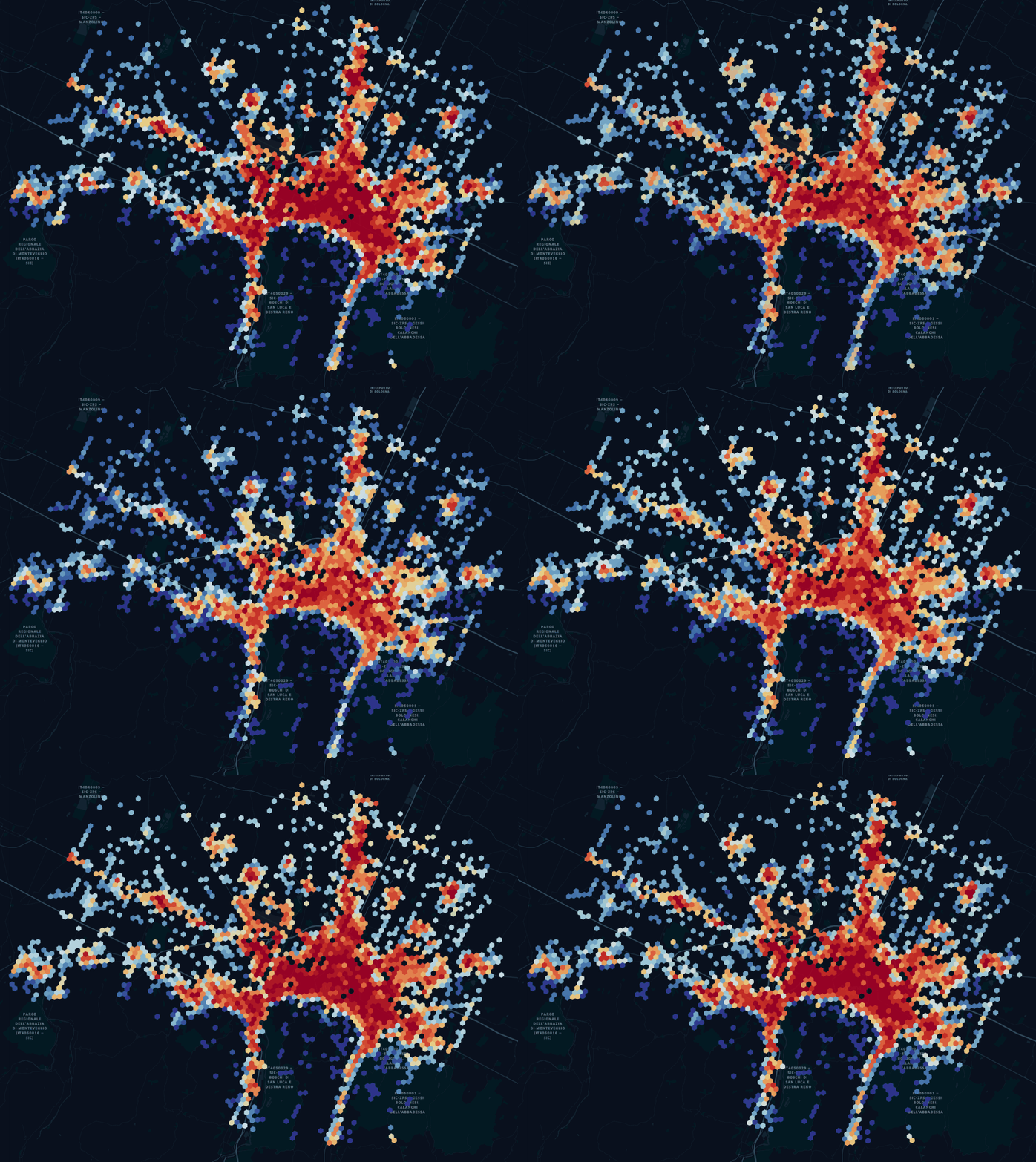
We redistribute the census
In our model, everyone begins in the cell where they live and gets a probability of being somewhere else at a given hour. To make sure no one gets lost or miscounted, we ensure those probabilities sum to one and use place attractiveness to work out where people are most likely to go during the day. At night, everyone is home, so the model returns the residential grid it started from.
Two kinds of evidence
Who people are and where they go need different sources.
Household travel surveys and time-use surveys record what share of 15-to-64-year-olds are at work at ten in the morning, or what share of the over-65s are at home. They are probability samples of the whole population, so they cover every age group.
Road networks, points of interest and their opening hours, and high-frequency location traces where we have them, describe where the destinations are and how far people travel to reach them. They are spatially detailed but record no age or employment status.
We take the activity pattern from the surveys and the spatial pattern from the mobility data, in that order: administrative counts fix the totals, standard occupancy schedules shape the day, city-scale reference data set the travel distances, and the traces adjust fine spatial detail last.
Try it for yourself
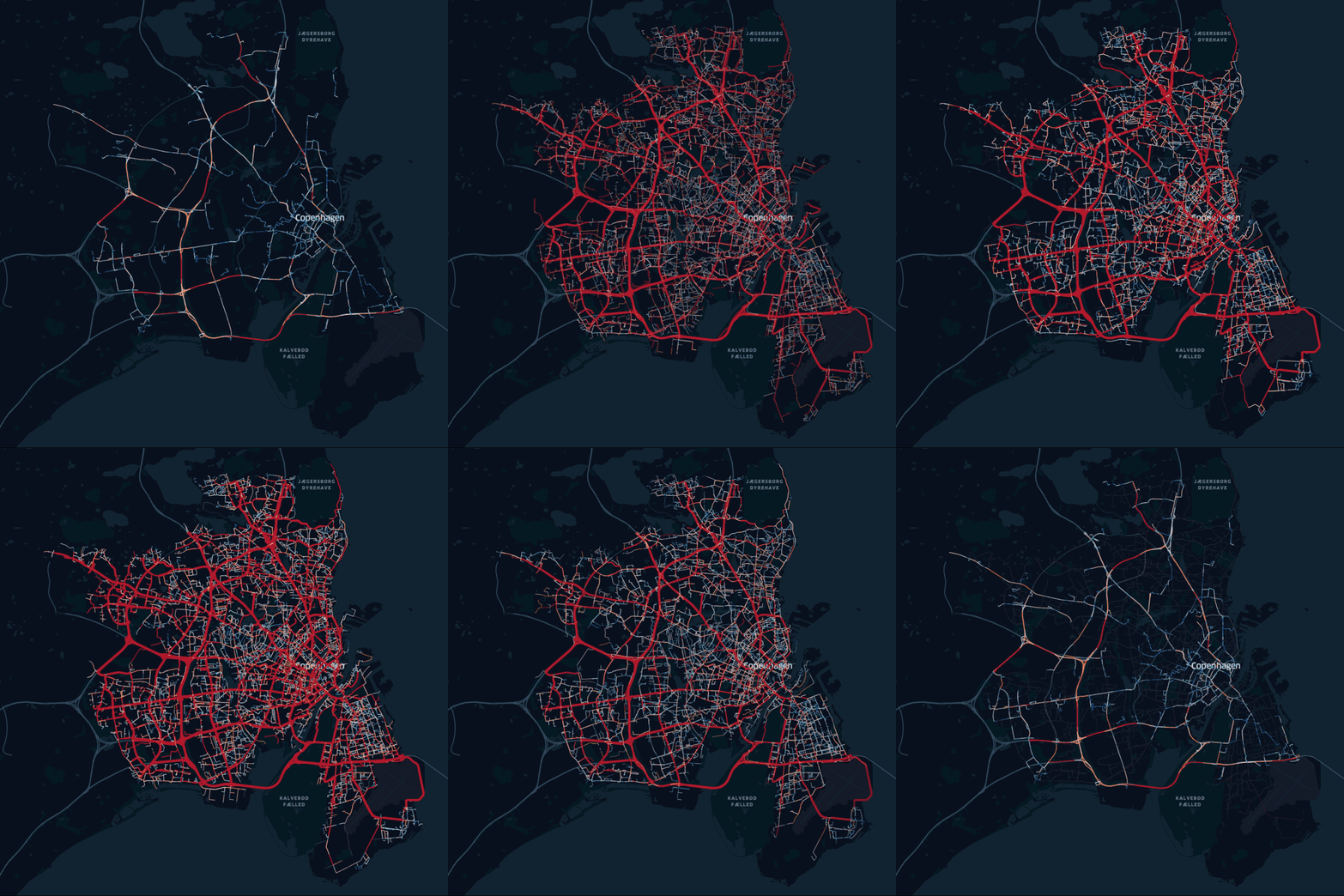
Compare the baseline with the simulated impact of a low-emission zone using the slider. The intervention affects the highlighted road segments; results shown are for a weekday, 18:00–21:00 time window.
Interact with the model and explore how different decisions could change the future of an urban environment.
Bring us a city you already know well
Tell us what you want to understand or change, and we’ll show you how our models predict where people are and how they move through it.